I may earn a commission at no extra cost to you. #ad
Free Guide: How to Customize Your Ideal Virtual Wife in Top Simulator Games
Jump to Section
Mastering Visual Customization
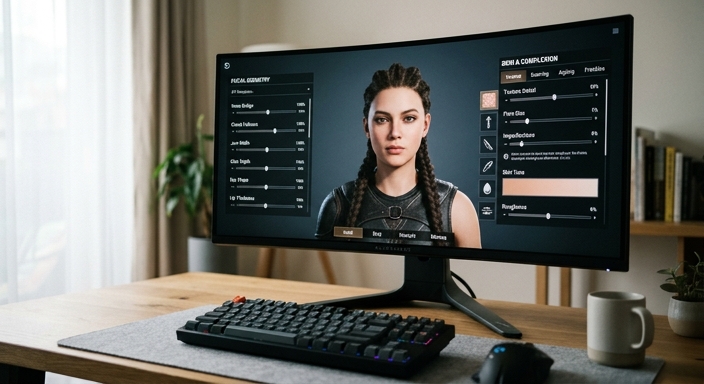
The journey to creating your ideal virtual partner begins with the physical form. Modern simulator games have moved far beyond simple presets. Today’s top-tier simulators offer granular "sculpting" tools that allow you to adjust everything from the arch of an eyebrow to the specific height and build of your character.
When customizing visuals, start with the skeletal structure. Adjusting facial proportions—such as jawline width, cheekbone height, and eye spacing—sets the foundation for a unique look. Don't rush this process; lighting in the character creator can often differ from the actual game environment. Pro tip: Always test your creation in different "lighting presets" if the game offers them to ensure the skin tones and textures look natural in all scenarios.
Defining Personality and Intelligence
A virtual wife is more than just a 3D model; she is an interactive AI. The true depth of a simulator lies in its personality matrix. Most high-end games use a "trait system" where you can select 3 to 5 core characteristics that dictate her behavior, dialogue, and reactions.
Common traits include:
- The Intellectual: Prefers deep conversations and values logic over emotion.
- The Romantic: High affection needs and specialized romantic dialogue options.
- The Adventurer: Enjoys exploration and has a higher tolerance for unpredictable events.
- The Caregiver: Focuses on domestic harmony and supportive interactions.
Choosing conflicting traits can lead to interesting, albeit sometimes challenging, gameplay. For instance, pairing "Ambitious" with "Lazy" might create a character who talks about big dreams but never wants to leave the house!
Selecting the Perfect Voice and Mannerisms
Audio is often the most overlooked part of customization. The sound of your virtual partner's voice significantly impacts immersion. Many modern simulators allow you to choose between different voice actors and then further customize the "pitch" and "resonance" using sliders.
Furthermore, idle animations or "mannerisms" define her presence. Does she stand tall and confident, or is she more prone to shy, fidgety movements? Selecting a set of animations that matches her personality traits ensures a cohesive experience. A "Serious" personality paired with "Goofy" animations can break the immersion, so choose wisely.
Crafting the Ultimate Wardrobe
Fashion is the final layer of customization. In the world of virtual wives, clothing is often tied to "buffs" or relationship triggers. Some games feature a dynamic wardrobe where your partner will change outfits based on the time of day, the weather, or the specific activity you are doing together.
When selecting a wardrobe, consider the "color theory." Soft pastels often align with a gentle personality, while bold blacks and reds might suit a more assertive character. Many top-tier sims also feature "layered" clothing systems, allowing you to mix and match jackets, shirts, and accessories for a truly bespoke look.
Advanced Customization Through Mods
If the base game doesn't offer enough variety, the modding community usually fills the gap. Games with active modding scenes (like The Sims or specialized AI companions) offer thousands of community-created assets. These can range from realistic 4K skin textures to entirely new personality archetypes written by community authors.
Before installing mods, always ensure your game version is compatible. Mods can significantly enhance the visual fidelity, adding features like dynamic hair physics or expanded dialogue trees that make the virtual wife feel more alive than ever before.
Maximizing Relationship Compatibility
The ultimate goal of customization is to create a character that resonates with your playstyle. This is often governed by hidden "compatibility scores." In many simulators, your own character's traits will interact with your virtual wife's traits.
To maximize this, look for "Synergy Traits." For example, if your character is a "Foodie," customizing your virtual wife with the "Chef" trait will unlock unique bonding events and faster relationship progression. Tailoring her to complement your in-game avatar creates a much smoother and more rewarding experience.
Frequently Asked Questions
In most modern simulators, you can change hair and clothing at any time. However, fundamental physical changes like height or facial structure usually require a "Plastic Surgery" item or a specific in-game terminal.
Currently, games that support heavy modding or use advanced AI engines (like VAM or high-end RPGs) offer the most granular control over both looks and personality.
Yes! In well-developed simulators, traits affect the success rate of interactions, the types of gifts she likes, and even the "ending" of certain relationship arcs.